Ever wonder how all that fuel gets stored before it reaches your car or heats your home? It’s not magic; it’s a meticulously managed system, especially here in Canada. It’s a dance between need and responsibility, where physics meets policy, and steel holds the line against potential environmental catastrophe.
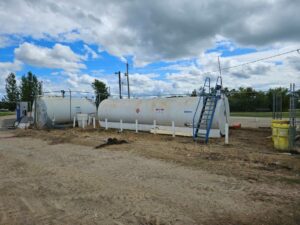
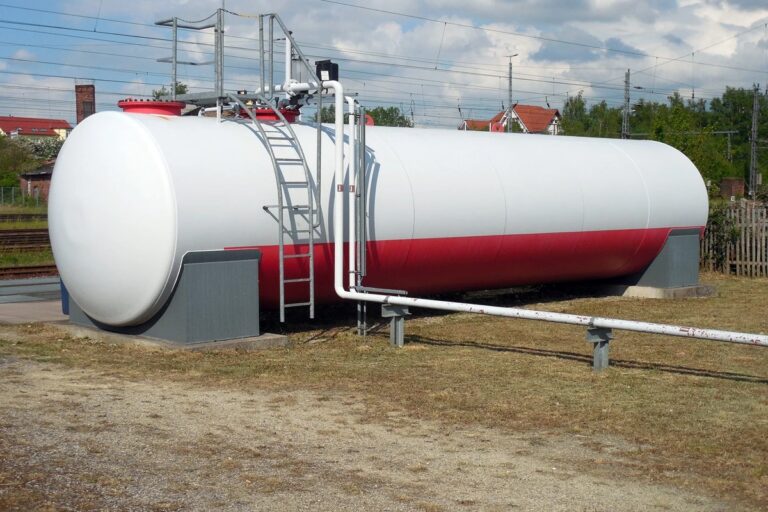
Aboveground fuel tanks (ASTs) are everywhere, from gas stations dotting our highways to remote industrial sites clinging to the edges of the wilderness. They’re essential for storing everything from diesel to heating oil – the lifeblood of our modern existence. But it’s not as simple as just plonking a tank down; there’s a whole world of rules and reasons behind every installation, a silent language of standards and safeguards.
Why does this matter? Because we’re talking about safety, the environment, and keeping Canada running. We’re talking about preventing another Attawapiskat, where a heating oil spill shook a community to its core. This post will explore the fascinating (and sometimes contentious) world of ASTs in the Great White North. It’s a story of evolution, of learning from mistakes, and of striving for a future where progress doesn’t come at the expense of our planet.
The Journey Through Time: From Basic Barrels to Sophisticated Storage
-
Early Days (Pre-1970s): The “Fire First” Era: Back in the day, the main worry was fire. The National Fire Code (1963) and CSA Standard B139 (1957) were the big guns, focused on keeping flames at bay. We lived in a world where risk was primarily conceived in terms of immediate, visible danger. Environmental protection? Not so much a priority. It was an era defined by pragmatism, where the immediate needs often overshadowed long-term consequences.
-
The Green Awakening (1970s-1990s): “Oops, Our Groundwater!” This period marked a shift in consciousness. Public awareness about environmental damage surged. Suddenly, the unseen became visible, the abstract became tangible. Spills and leaks from older tanks started contaminating precious groundwater, turning wells toxic and poisoning the very source of life. This led to the creation of the “Environmental Code of Practice for Aboveground Storage Tank Systems” by the Canadian Council of Ministers of the Environment (CCME) in 1994, later updated in 2003. This was a game-changer, a philosophical realignment that shifted focus to preventing pollution. We began to see the interconnectedness of things, the delicate balance that we had previously disrupted.
-
Modern Mandates (2008 Onwards): Federal Power Kicks In: The federal “Storage Tank Systems for Petroleum Products and Allied Petroleum Products Regulations” (under CEPA 1999) came into force in 2008. This wasn’t just about suggesting best practices; it was about setting a national standard, a line in the sand. Why? Because around 15% of federal jurisdiction tanks were old, lacking modern leak detection, corrosion protection, and containment. It was time for an overhaul, a systemic upgrade to bring our infrastructure into the 21st century. Key changes: Mandatory registration, secondary containment, spill and overfill protection, professional installation, and strict removal rules for risky older tanks. This was the era of accountability, where inaction carried a price.
The Great Debate: Who’s Saying What?
-
Government’s Stance: Safety First, Environment Always. The government’s approach can be characterized as a multi-layered regulatory maze: Federal (Environment and Climate Change Canada), Provincial, and Territorial authorities all have a say. They mandate everything from ULC certification for components to professional engineer stamps on designs. Think strict rules for spill containment, leak detection, and corrosion protection. They operate under the principle of precaution, seeking to minimize risk through comprehensive oversight. Regular reviews and updates to keep standards sharp and reflect new tech.
-
Industry’s Take: Efficiency, Innovation, and Practicality. Groups like the Canadian Petroleum Contractors Association (CPCA) are all about training and certified work. They are the boots on the ground, the ones who translate policy into practice.
-
Pros of ASTs (from their view): Easier to inspect (you can see leaks!), often cheaper to install than underground tanks, simpler leak detection, and easier to move if needed.
-
Cons/Challenges: Vulnerable to weather and damage, security risks (theft!), and sometimes not the prettiest sight. They also push for design flexibility to suit Canada’s diverse geography and climate. They seek a balance between regulatory compliance and operational efficiency, advocating for solutions that are both effective and economically viable.
-
-
Environmental Advocates: No Spills, No Compromises! Groups like Environmental Defence and Sierra Club Canada are the watchdogs, the conscience of the system.
-
Their core mission: Prevent pollution! Spills can devastate soil, groundwater, and waterways (remember Attawapiskat’s heating oil spill?).
-
Pushing for stricter regulations, robust enforcement, and better resilience against extreme weather (floods making tanks float away!). They’re keenly focused on addressing aging infrastructure and volatile organic compound (VOC) emissions. They hold a firm line, pushing for continuous improvement and uncompromising environmental stewardship.
-
Tank Troubles: The Controversies Lurking Beneath the Surface
-
First Nations Communities: An Unfair Burden? A major controversy: In 2015, half of fuel tanks in remote First Nations communities didn’t meet federal standards. This sparked debates about equitable infrastructure, proper enforcement, and adequate funding for Indigenous communities to manage risks. It raises fundamental questions about justice, equity, and the responsibility of the state to protect vulnerable populations.
-
The VOC Vexation: Volatile Organic Compound (VOC) emissions are a big deal. They contribute to smog and release carcinogens. Are existing controls enough? Environmental groups say no, pushing for more stringent regulations on emissions control equipment, especially near communities. It’s a debate about acceptable levels of risk, about balancing economic activity with public health.
-
Federal vs. Provincial Tug-of-War: While federal regulations set a baseline, provinces and territories can (and do) add more stringent requirements. This can lead to a patchwork of rules, creating complexities for installers and operators across the country. It’s a perennial tension in federal systems, the balance between national consistency and regional autonomy.
-
Arctic Access & Remote Challenges: Imagine doing monthly inspections in the high Arctic. Some regulations face practical challenges in remote, unmanned locations due to weather-dependent access. Exemptions and adaptations are often debated. This highlights the limitations of one-size-fits-all approaches, the need for flexibility and context-specific solutions.
-
“What’s Covered, What’s Not?”: The regulations have specific exemptions (e.g., small heating oil tanks). This can sometimes lead to debates about the scope of protection and whether enough systems are truly regulated. Where do we draw the line? What level of risk is acceptable for unregulated systems?
-
Enforcement: Fines and Accountability: The government takes compliance seriously, with hefty fines for non-compliance (e.g., Department of National Defence fined $175,000 for not registering a tank). But constant vigilance is needed. Enforcement is the crucial link between policy and reality. Without it, regulations become mere words on paper.
-
Climate Change: The New Frontier of Risk: Extreme weather (floods, high winds) directly threatens ASTs. Tanks floating away or structural failures from water accumulation are real dangers, leading to calls for designs that can withstand Canada’s changing climate. Climate change forces us to rethink our assumptions, to design for a future that is increasingly uncertain.
The Road Ahead: Smart Tanks, Green Tech, and Ever-Evolving Rules
Tech Innovations: Smarter, Safer, Greener Tanks.
-
Modular Marvels: “Gas Station In-A-Box” portable systems are emerging for quick installation and relocation, minimizing environmental risk.
-
Digital Guardians: AI and IoT are taking over, with built-in sensors for continuous monitoring (temperature, pressure, fluid levels). This means predictive maintenance and instant leak detection.
-
Robotic Inspectors: No need to empty tanks! Robots are doing internal API 653 inspections while tanks are still in service.
-
Tougher Materials: Fiberglass-reinforced plastic (FRP) and double-walled steel with advanced coatings are fighting corrosion and extending tank life.
-
Vapor Recovery: Reducing harmful VOC emissions through advanced recovery systems is a growing trend.
These technologies represent a paradigm shift, moving from reactive to proactive, from human-dependent to automated systems. They offer the promise of greater safety, efficiency, and environmental protection.
Regulatory Evolution: Always Adapting.
-
2025 Updates Galore: Expect more amendments to federal regulations, updating 48 technical standards (some harmonized with US standards) to keep pace with technology. This aims for easier compliance without extra costs.
-
New VOC Regulations (March 2025): A new federal rule is clarifying requirements for reducing VOC and benzene emissions from large tanks and loading operations, requiring floating roofs or vapor control systems for many.
-
Continuous Review: Governments are committed to regular reviews to ensure standards remain current and effective.
Regulatory evolution is a necessary process, a continuous calibration to ensure that our rules remain relevant and effective in a changing world.
Market Trends: Growth, Oil & Gas, and New Fuels.
-
The global AST market is booming, projected to hit $11.08 billion by 2031. North America leads the charge.
-
Oil and gas will remain the dominant user (40% market share by 2025).
-
Look out for high-density polyethylene (HDPE) plastic tanks and more floating roof designs (to minimize emissions) gaining traction.
-
Driving demand: Industrial growth, replacing old infrastructure, and the rising need to store alternative fuels (LNG, CNG, biofuels).
These market trends reflect the evolving energy landscape, the transition towards new fuels, and the growing demand for energy storage solutions.
How Absolute Petroleum Can Help
Installing an aboveground fuel tank is a big step, and you don’t have to do it alone. With decades of hands-on experience, Absolute Petroleum is ready to guide you through every part of the process.
We’ve been Canada’s trusted fuel systems partner for over 20 years. Our team includes 30+ experts with more than 200 combined years of licensed Petroleum Technician experience. That means you get the knowledge, skill, and precision your project needs, from start to finish.
Whether you’re setting up a single tank for backup power or need a full bulk fuel storage solution, we’ve got it covered.
What We Do
At Absolute Petroleum, we handle everything:
- Planning and site assessment
- Permitting and code compliance
- Aboveground fuel tank installation
- TSSA-compliant systems and documentation
- Ongoing maintenance, upgrades, and repairs
Our team works across industrial sites, remote areas, and commercial operations. We’ve successfully delivered projects across Canada — including recent installs at Long Plains — always following strict TSSA regulations, ULC S601-07, and all local codes.
From choosing the right double-wall steel tanks to setting up automated fueling systems, our goal is to give you a safe, efficient, and worry-free setup.
Ready to start your tank installation with confidence? Contact Absolute Petroleum today for expert help and a custom quote.
Conclusion: Securing Our Fuel, Protecting Our Future
Aboveground fuel tanks are unsung heroes of our infrastructure, but their silent work requires constant vigilance. They stand as a testament to our ability to harness energy for our needs, but also as a reminder of the responsibility that comes with that power.
Canada’s approach, a blend of historical fire safety and modern environmental protection, is continually refined by government, industry, and environmental advocates. It’s a process of negotiation, of compromise, and of striving for a common goal.
From dealing with historical oversight to embracing futuristic AI monitoring, the journey of aboveground fuel tank installation in Canada is a dynamic story of balancing necessity with responsibility. It’s about ensuring our energy needs are met without compromising our precious environment. It’s a story that is still being written, and one in which we all have a stake.