Summary: Yes, diesel fuel tanks need to be grounded and bonded. Grounding protects against static electricity buildup that can cause sparks during fuel transfer. While diesel is harder to ignite than gasoline, it can still produce flammable vapors, making proper grounding a legal requirement and a critical safety measure for any fuel storage system.
What Does It Mean to Ground a Diesel Fuel Tank?
Grounding a diesel tank means connecting it to the earth. This gives static electrical charges a safe path to dissipate.
Without grounding, static can build up on the tank’s surface. When enough charge accumulates, it can discharge as a spark.
That spark can be dangerous near diesel vapors.
Think of it like this: grounding drains unwanted electrical energy before it becomes a hazard.
Grounding vs. Bonding: What’s the Difference?
Many people use these terms interchangeably. They are not the same.
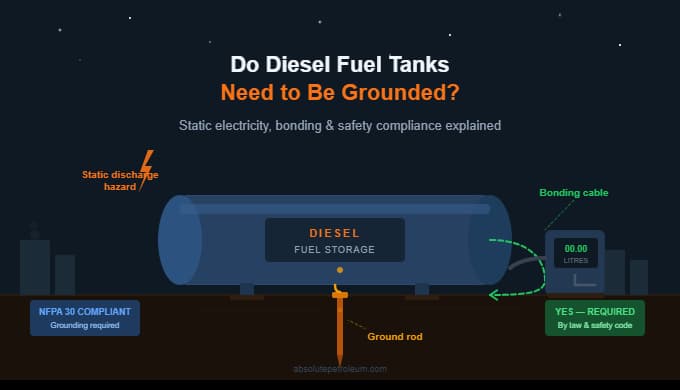
Grounding connects the tank or equipment to the earth. It safely dissipates static charges and fault currents into the ground.
Bonding connects two conductive objects together. The goal is to equalize their electrical potential. This prevents a spark when two objects with different charges come into contact.
Both bonding and grounding work together during fueling operations. Bonding connects the fuel nozzle to the equipment’s tank to prevent sparks. Grounding connects the equipment to the earth to dissipate any built-up charge.
You typically need both for safe diesel fuel transfer.
Why Does Static Electricity Build Up During Fuel Transfer?
Fuel moving through hoses and pipes generates friction. That friction creates static electricity.
Static charges build up from the flow of diesel through hoses and pipes. If that charge discharges while flammable vapors are present, it can ignite the vapor-air mixture.
Diesel has a higher flash point than gasoline. That makes it harder to ignite at room temperature.
But the risk is not zero. In hot conditions or enclosed spaces, diesel vapors can form. Those vapors are flammable.
Static can still ignite flammable vapors in fuel-air mixtures, especially during transfers or when tanks contain volatile vapors.
This is why grounding matters — even for diesel.
Do Diesel Fuel Tanks Legally Require Grounding?
Yes. Several regulatory bodies require grounding for diesel fuel storage and transfer systems.
OSHA 29 CFR 1910.106 and NFPA 30 (Flammable and Combustible Liquids Code) both recommend bonding and grounding for flammable and combustible liquids during transfer.
In Canada, the Storage Tank Systems for Petroleum Products Regulations under the Canadian Environmental Protection Act 1999 set requirements for storage tank systems under federal jurisdiction, aimed at reducing the risk of releases including leaks and spills.
Grounding and bonding are not optional best practices. They are core safety requirements designed to prevent static discharge, sparks, and ignition during fuel transfer.
Inspectors look for proper grounding connections during audits. Failing to comply can lead to costly corrective action.
Aboveground vs. Underground Diesel Tanks: Are the Rules Different?
The rules vary slightly depending on tank type.
Aboveground storage tanks (ASTs) are exposed to weather and lightning strikes. They have a higher risk of static buildup and external electrical hazards. Grounding is beneficial when tanks are placed in both hazardous and non-hazardous areas. It drains away static charges to prevent fire incidents.
Underground tanks are often considered naturally grounded because they sit in direct contact with the earth. Most metal storage tanks are effectively grounded because they sit on concrete pads that are in direct contact with the earth and are often bolted into those pads.
However, even underground tanks benefit from verified grounding connections. Do not assume contact with soil is enough.
Portable tanks and mobile fuel units require bonding to the vehicle or pump before filling begins. A bonding cable with alligator clamps is the standard approach.
How to Properly Ground a Diesel Fuel Tank
Proper grounding is not complicated. But it must be done right.
To ensure safe diesel transfer, connect a bonding cable from the fuel nozzle or hose to the equipment’s fuel tank or chassis. Ensure the cable has clean, tight contact with bare metal — paint, rust, or dirt can block the connection. Then connect the tank or fueling truck to a proper earth ground using a grounding rod or established site grounding system.
Key steps for a properly grounded diesel fuel tank system:
Use the right grounding rod. A copper or steel ground rod driven into the earth is the standard. The rod should reach below the frost line in colder climates like Manitoba.
Connect with bare copper wire. Use an appropriately sized bare copper conductor between the tank and the ground rod. The best way to ground any fuel tank is to run a cable clamp from the tank to a six-foot grounding rod. These rods are available at most hardware stores.
Make metal-to-metal contact. Paint, rust, or sealant between the conductor and bare metal is a major issue. Grounding connections must make metal-to-metal contact.
Verify continuity. Use a ground verification system where available to confirm the grounding is continuous and effective.
Check cables regularly. Inspect bonding and grounding cables for fraying, corrosion, or loose connections. This is especially important before winter, when cold, dry air raises static electricity risk.
Common Grounding Mistakes to Avoid
Even experienced operators make grounding errors. Here are the most common ones.
Assuming the tank is already grounded. Just because a tank sits on concrete does not mean it is properly grounded. Verify all connections.
Using painted or corroded contact points. Electrical connections must touch bare metal. Any coating breaks the circuit.
Skipping bonding during transfers. Grounding the tank alone is not enough. Bond the nozzle, hose, and receiving container before every transfer.
Neglecting portable tanks. Bonding and grounding should be part of your site’s Standard Operating Procedure for all fuel transfers, not just for diesel.
Ignoring winter conditions. Cold, dry air raises static electricity risk, while snow, frozen ground, and corrosion expose weaknesses in grounding systems that may go unnoticed the rest of the year.
Grounding Plastic vs. Metal Diesel Tanks
Metal tanks are easier to ground. You can connect directly to the tank body.
Plastic tanks do not conduct electricity. You cannot ground the tank itself the same way.
For plastic diesel tanks, use conductive straps or static-dissipating hoses. You can also bond the fill nozzle to the chassis of the vehicle or equipment being fueled.
The goal is always the same: create a path for static electricity to safely dissipate before it becomes a spark.
Final Thoughts: Is Grounding a Diesel Tank Worth the Effort?
Absolutely. The risk of a static spark igniting diesel vapors is real — even if the chance is low.
Bonding and grounding are low-cost, high-impact steps to reduce the risk of a fire. A spark you can’t see can ignite a fire you can’t stop.
For commercial petroleum operations, bulk fuel plants, construction sites, and remote fueling stations, proper grounding is both a legal requirement and a best practice.
At Absolute Petroleum, we install, inspect, and maintain fuel tank systems across Canada — and grounding is always part of the job. A properly grounded system protects your equipment, your team, and your operation.
If you need help assessing your diesel fuel storage setup or are planning a new bulk fuel installation, contact our team today.