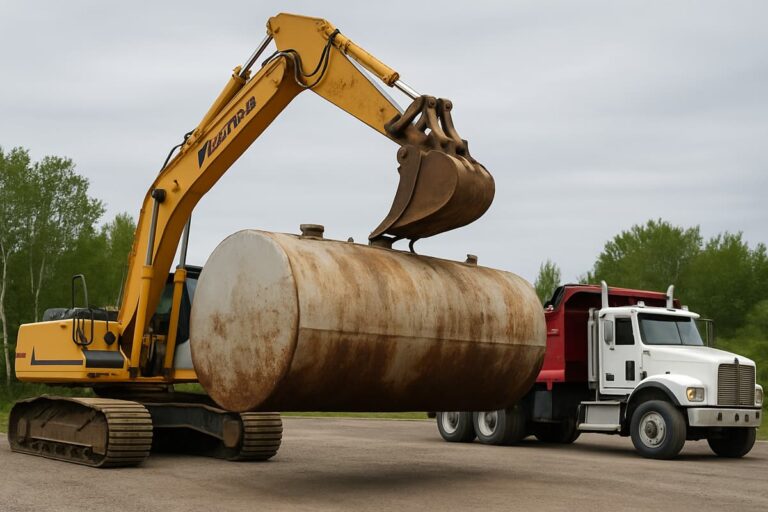
Aboveground fuel tanks (ASTs) are essential for many businesses and properties across Canada. They provide convenient, accessible fuel storage, but over time, these tanks can become a liability. Whether due to corrosion, environmental wear, or changes in regulations, aging fuel tanks pose significant risks. Unaddressed tanks can leak, catch fire, or degrade local ecosystems. In Canada’s fluctuating climates — from the coastal dampness of British Columbia to the harsh winters of Saskatchewan — these issues can accelerate. Timely removal isn’t just a recommendation; it’s a responsibility.
What Is an Aboveground Fuel Tank (AST)?
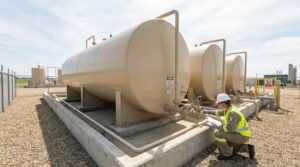
Aboveground fuel tanks are storage vessels designed to hold flammable or combustible liquids such as gasoline, diesel, or heating oil. Unlike underground tanks, ASTs are positioned on or just above the surface, often mounted on support structures or concrete slabs. They’re common in commercial fueling stations, industrial yards, farms, and even rural homes. ASTs vary widely in size and material, ranging from compact cylindrical units to large horizontal tanks made of steel or fiberglass-reinforced plastic. Their visibility makes them easier to inspect and maintain — but also susceptible to external environmental stressors.
Signs Your Fuel Tank Needs to Be Removed
Aging ASTs often display warning signs that should not be ignored. Visible rust, peeling paint, or corrosion around seams can indicate weakening structural integrity. Bulges or dents suggest previous impacts or internal pressure issues. Dark stains or oily patches beneath the tank could point to slow leaks. If you detect a persistent fuel odour in the vicinity, it’s time for an assessment. In some cases, tanks may no longer meet current compliance codes — a red flag that removal or replacement is due. Trusting your eyes (and nose) could prevent a costly environmental or legal incident.
Canadian Regulations and Guidelines for AST Removal
Fuel tank removal in Canada is governed by strict regulations aimed at preserving environmental integrity and public safety. National codes such as the Canadian Environmental Protection Act (CEPA) and guidelines from the Canadian Council of Ministers of the Environment (CCME) set the overarching framework. However, provincial authorities like Alberta Environment and Parks or Ontario’s TSSA (Technical Standards and Safety Authority) add region-specific requirements. Licensed Petroleum Technicians (LPTs) must often be engaged to oversee decommissioning. Regulatory compliance isn’t optional — it’s the law. Failure to follow protocol could result in fines, legal action, or environmental remediation orders.
Step-by-Step: How the Removal Process Works
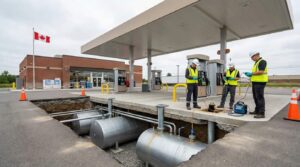
- Initial Inspection and Decommissioning: A certified technician begins with a thorough inspection to assess the tank’s condition and contents. The tank is then decommissioned — meaning it’s rendered inert by disconnecting it from power sources and removing residual fuel.
- Fuel Draining and Residue Management: Remaining fuel is safely pumped out and stored or disposed of according to environmental regulations. Sludge and residues are cleaned using vacuum trucks or absorbent materials, ensuring no flammable material remains inside.
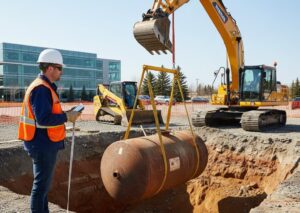
- Dismantling, Lifting, and Transport: Once cleaned, the tank is disassembled if necessary and hoisted using cranes or lifting equipment. Transport vehicles, specially certified for hazardous material, move the tank to an approved disposal or recycling facility.
- Site Cleanup and Final Assessment: Soil beneath the tank is tested for contamination. If pollutants are detected, soil remediation or excavation may be required. A final inspection certifies the site is clear of environmental hazards.
Environmental Risks of Improper Removal
Improper removal of ASTs can trigger a cascade of environmental threats. Leaking fuel may seep into the soil, reaching groundwater sources or nearby waterways, compromising ecosystems and potable water supplies. Volatile organic compounds (VOCs) emitted during careless draining or tank breaches can also contribute to air pollution and health risks. In colder provinces, frozen ground can conceal slow leaks until spring thaw reveals the damage. Beyond environmental consequences, liability for improper removal is severe — owners may face lawsuits, remediation costs, and long-term reputational damage.
Who Should Handle the Job? Choosing the Right Contractor
Removing a fuel tank isn’t a simple haul-away job. It demands specialized knowledge, compliance awareness, and precision. Only certified contractors with experience in petroleum system decommissioning should be considered. Look for credentials such as Licensed Petroleum Technician (LPT) certifications, proof of insurance, and previous project references. Confirm they handle permits and documentation, and that they use appropriate safety equipment. A reputable contractor also offers post-removal services like soil testing and site restoration — not just disposal. Vet your choice carefully; it’s an investment in safety and compliance.
Cost Breakdown: What You Can Expect to Pay in Canada
The cost of removing an aboveground fuel tank in Canada varies significantly based on several factors:
- Tank Size and Material: Larger tanks or those made of heavy-duty steel may require additional manpower and equipment.
- Location Accessibility: Urban removals with limited access can cost more than straightforward rural jobs.
- Contamination Levels: If soil remediation is necessary, costs can escalate quickly.
- Disposal Fees: Transport and disposal of hazardous materials contribute to the final bill.
Typical removal costs range between $2,000 and $10,000 CAD, depending on these variables. In some provinces, tax incentives or environmental rebates may be available to offset part of the expense.
How Absolute Petroleum Can Help
Absolute Petroleum brings unmatched expertise and reliability to the complex task of aboveground fuel tank removal across Canada. As Manitoba’s largest petroleum contractor, our team of over 30 highly trained professionals offers more than 200 years of combined Licensed Petroleum Technician (LPT) experience. We understand the regional regulations, environmental standards, and technical nuances required to safely decommission, remove, and remediate AST systems.
Our removal services are fully turnkey — from site assessment and regulatory compliance to fuel recovery, transport, and final cleanup. We ensure every step is handled with precision, using advanced equipment and certified procedures that minimize downtime and risk. Whether you’re a business owner looking to upgrade infrastructure or a property manager addressing liability concerns, we tailor our services to meet your unique needs.
Absolute Petroleum also assists with permit acquisition, environmental reporting, and coordination with provincial authorities to ensure full compliance. Our commitment to safety, transparency, and long-term sustainability makes us a trusted partner for tank removal projects across Western Canada.
What Happens After the Tank Is Removed?
Once the tank is gone, the site undergoes final evaluation. Soil testing ensures there are no lingering contaminants. If contamination is found, remediation must be carried out immediately. The site can then be repurposed — for parking, building expansion, or the installation of a new compliant tank. Property owners receive documentation confirming proper removal, which is essential for insurance, resale, and regulatory compliance. Keeping these records on file is critical, especially when ownership of the property changes hands.
Alternatives to Full Tank Removal
In some scenarios, full tank removal isn’t required. Tank decommissioning — where the tank is drained, cleaned, filled with inert material like sand or foam, and left in place — may be an option if permitted by provincial codes. Another alternative is tank replacement, especially if the existing infrastructure can be upgraded with a newer, double-walled unit. For eco-conscious consumers, aboveground alternatives such as solar-powered heating systems or modular fuel cells are worth exploring. These options reduce fossil fuel dependency while maintaining energy autonomy.
Conclusion
Aboveground fuel tank removal is more than just a maintenance task — it’s a commitment to environmental stewardship and responsible property ownership. Acting early can help avoid disaster, streamline operations, and align your site with modern safety standards. Whether your tank is aging, unused, or out of compliance, taking action now ensures a cleaner, safer future.