Introduction to LPT Site Compliance in Manitoba
Licensed Petroleum Technicians (LPTs) serve as the frontline guardians of environmental and operational integrity at petroleum facilities. Their responsibilities stretch beyond installation and repair—they ensure that fuel systems adhere to complex regulatory codes, prevent environmental contamination, and uphold public safety. In Manitoba, LPTs are integral to ensuring compliance with both provincial and federal standards governing fuel storage and distribution.
Why Compliance Inspections Matter for Petroleum Sites
Compliance inspections are not mere formalities; they are vital risk mitigation tools. Fuel sites handle flammable and environmentally hazardous substances. A minor oversight can escalate into an environmental disaster or public hazard. Regular inspections identify potential failures before they become liabilities, ensuring operational continuity and public trust.
Regulatory Framework Governing Petroleum Sites
Overview of Provincial and Federal Regulations
Manitoba’s petroleum sector operates under a tightly regulated landscape. Provincial regulations, including Manitoba Conservation and Climate standards, work in concert with federal mandates like the Canadian Environmental Protection Act (CEPA) and Canadian Council of Ministers of the Environment (CCME) codes. Together, these frameworks create a robust compliance structure.
Key Agencies Involved: Manitoba Conservation, CSA, and Others
Several agencies govern the inspection ecosystem. Manitoba Conservation enforces environmental and operational standards. The Canadian Standards Association (CSA) provides design and installation codes, while Environment and Climate Change Canada sets national environmental mandates. Municipal authorities may impose additional building and fire safety codes.
Consequences of Non-Compliance
Non-compliance can result in hefty fines, facility shutdowns, or legal action. Beyond regulatory penalties, reputational damage and insurance issues can cripple long-term operations. In serious cases, contaminated soil or water may trigger expensive remediation and long-term monitoring obligations.
What Is an LPT Compliance Inspection?
Scope and Objectives of Site Inspections
An LPT compliance inspection is a detailed evaluation of a petroleum facility’s infrastructure, operations, and documentation. Inspectors assess everything from the physical condition of tanks and piping to electronic monitoring systems and emergency preparedness.
Frequency and Triggers for Inspections
Inspections may be scheduled periodically—annually, bi-annually, or quarterly—depending on site classification and risk profile. Unscheduled inspections may also be triggered by complaints, spills, equipment failures, or changes in ownership or operations.
Types of Petroleum Facilities Requiring Inspection
Retail Fuel Stations: Retail stations are inspected for compliance with dispensing safety, leak detection, tank integrity, and signage requirements.
Bulk Fuel Storage Terminals: Bulk terminals handle large volumes and pose high risks. Inspections here focus on secondary containment, inventory reconciliation, and pressure relief systems.
Cardlocks and Fleet Fueling Facilities: These semi-private refueling systems are scrutinized for access control, accurate fuel metering, and automated shutdown mechanisms.
Private and Commercial Fuel Systems: From farms to logistics depots, private systems must meet the same compliance thresholds, including proper installation, documentation, and spill containment.
Pre-Inspection Requirements
Documentation and Permits to Have Ready: Operators must present site plans, as-built schematics, installation certificates, inspection logs, tank registration numbers, and permit documentation.
Preparing Staff and Site Access for Inspectors: Personnel must be briefed, access routes cleared, and hazardous zones secured. Timely cooperation facilitates a smoother inspection process.
Key Inspection Categories
Environmental Safety and Spill Prevention: Inspectors verify containment berms, spill kits, and spill response procedures to minimize environmental hazards.
Mechanical System Integrity: Tank conditions, pressure relief valves, piping joints, and dispenser units are inspected for wear, corrosion, and leaks.
Electrical System Compliance: Electrical systems must comply with Canadian Electrical Code standards, especially in classified (hazardous) areas.
Fire Safety and Emergency Shutoff Systems: Emergency shutoff switches, fire extinguishers, and signage are checked to ensure immediate hazard response capability.
Leak Detection and Monitoring Systems: Automatic tank gauging systems, line leak detectors, and alarm configurations are verified for real-time monitoring.
Underground Storage Tank (UST) Inspection Protocols
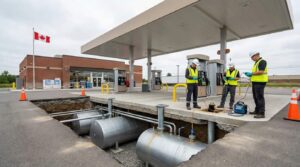
Double-Wall vs. Single-Wall Tank Requirements: Double-walled tanks provide interstitial monitoring and greater protection against leaks. Single-wall tanks face stricter compliance timelines and eventual decommissioning.
Corrosion Protection Systems: Cathodic protection, anode monitoring, and dielectric coatings are essential for underground metal tanks and piping systems.
Monitoring Wells and Product Sampling: Groundwater monitoring wells and periodic product sampling ensure early detection of subsurface contamination.
Aboveground Storage Tank (AST) Inspection Guidelines
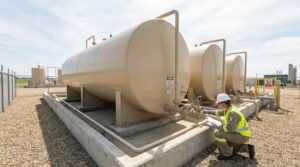
Secondary Containment and Berm Integrity: ASTs must have structurally sound berms to capture spills. Drain valves must be locked or monitored.
Access, Venting, and Overfill Protection: Safe access platforms, flame arrestors, and overfill alarms are critical for tank safety and regulatory compliance.
AST Labelling and Signage Standards: Tanks must be clearly labelled with contents, hazard symbols, and emergency information as per WHMIS and TDG standards.
Dispenser and Piping System Checks
Fuel Dispenser Safety Features: Breakaway couplings, shear valves, and emergency shutoffs are evaluated for proper function and maintenance.
Pressure Testing and Line Integrity: Pressure testing ensures pipelines can withstand operational loads without leakage or failure.
Pipe Fittings, Valves, and Containment Sumps: All fittings and valves must be leak-free and properly supported. Containment sumps should be dry, sealed, and alarmed.
Fuel Management and Inventory Control
Automated Tank Gauging Systems (ATG): ATGs are reviewed for calibration, data accuracy, and system alerts. Properly configured systems reduce leak risks.
Monthly Reconciliation Reports: Operators must reconcile product delivery, sales, and tank volumes monthly to detect unexplained losses.
Leak Thresholds and Alarm Settings: Thresholds must be set in accordance with provincial limits. Alarms must activate before reaching critical levels.
Safety Signage and Public Protection Measures
Placement and Visibility Requirements: Signage must be visible from all entry points, with clear font, contrast, and language. Emergency exits and routes should be marked.
Regulatory Signage for Emergency Contacts and Hazards: Information on emergency contacts, hazardous material classifications, and response instructions must be clearly posted.
Waste Handling and Contaminant Control
Used Oil and Petroleum Product Disposal: Used fluids must be stored in labelled, sealed containers and disposed of by certified hazardous waste handlers.
Spill Kits, Drip Trays, and Containment Protocols: Facilities must have accessible spill kits, use drip trays under dispensers, and document all containment practices.
Inspector Reporting and Documentation
What Inspectors Look For in Logs and Records: Inspection logs, maintenance schedules, alarm logs, and training records are reviewed for accuracy and completeness.
Digital vs. Paper-Based Inspection Reports: Digital records offer better traceability and are increasingly favored. Paper logs must be legible, updated, and accessible.
Examples of Non-Compliance Findings: Examples include corroded fittings, outdated signage, inoperative alarms, or missing logs—all of which can trigger penalties.
Post-Inspection Follow-Up
Interpreting the Compliance Report: The report details deficiencies, categorizes them by severity, and recommends corrective actions with deadlines.
Corrective Action Timelines and Requirements: Operators must address violations within specified timeframes, which vary by infraction severity.
Common Deficiencies Found During Inspections
Frequent Violations and Oversights: Typical issues include uncalibrated ATGs, expired fire extinguishers, cracked spill buckets, and poor documentation.
Costly Mistakes That Can Be Easily Avoided: Neglecting staff training, skipping monthly reconciliations, or ignoring minor leaks can lead to major non-compliance.
Re-Inspection Procedures and Penalties
What Happens if Your Site Fails: Failed inspections often result in re-inspections, potential operational halts, and mandatory remediation plans.
Fines, Site Shutdowns, and Re-Assessment: Penalties may escalate to thousands of dollars per day, especially for sites with environmental violations or safety hazards.
LPT Certification and the Inspector’s Role
Qualifications and Licensing of Inspectors: Inspectors must be provincially licensed LPTs with continuous professional development and field experience.
Importance of Third-Party Objectivity: Third-party inspectors ensure unbiased evaluations and eliminate internal conflict of interest risks.
Technological Tools Used During Inspections
Remote Monitoring Systems: Telemetry-based systems track tank levels, temperatures, and flow rates in real time, even offsite.
Digital Compliance Checklists: Tablet-based tools streamline inspections and ensure all inspection points are covered consistently.
Tank Monitoring Equipment: Ultrasonic sensors, vapor detection tools, and interstitial sensors help detect leaks with high precision.
Best Practices for Maintaining Year-Round Compliance
Staff Training and Safety Drills: Regular drills and certification programs empower staff to manage incidents and uphold compliance.
Scheduled Internal Audits: Quarterly self-inspections help identify deficiencies early, reducing surprise violations during official checks.
Maintenance Logs and Inspection Readiness: Keeping logs updated ensures historical accountability and inspection readiness at all times.
Partnering with a Certified Compliance Consultant
Benefits of Ongoing Professional Support: Consultants help navigate evolving regulations, reduce liability, and optimize site operations.
How Consultants Help Prepare for LPT Inspections: They perform mock inspections, update documentation, train staff, and rectify potential violations in advance.
Case Studies and Real-World Examples
Lessons Learned from Manitoba-Based Inspections: Past violations often stem from poor record-keeping or misinterpreting regulations. Learning from these helps avoid repetition.
Success Stories of Full Compliance Achievements: Facilities that adopted proactive compliance measures saw reduced downtime, higher efficiency, and improved public image.
How Absolute Petroleum Can Help
Trusted Experience: 200+ Years of Combined LPT Expertise
With decades of hands-on experience, Absolute Petroleum offers unmatched industry insight and practical solutions.
Manitoba’s Largest Petroleum Contractor with 30+ Skilled Employees
Their team spans diverse specialties—from tank installation to inspection preparedness—ensuring holistic service.
Full-Service Compliance Support for Inspection Readiness
From documentation to system calibration, Absolute Petroleum provides end-to-end inspection readiness services.
Proven Track Record in Delivering Safe, Efficient, and Innovative Solutions
Innovation, safety-first protocols, and customized solutions define their operational philosophy.
Long-Term Partner for Ongoing Site Compliance and Maintenance
Absolute Petroleum isn’t a one-time vendor—they are a strategic compliance partner for long-term operational resilience.
Conclusion
With tightening regulations and growing environmental scrutiny, the future demands proactive, tech-driven compliance models.
A culture of compliance is not optional—it’s essential. Investing in expertise, technology, and rigorous standards ensures both sustainability and business longevity.