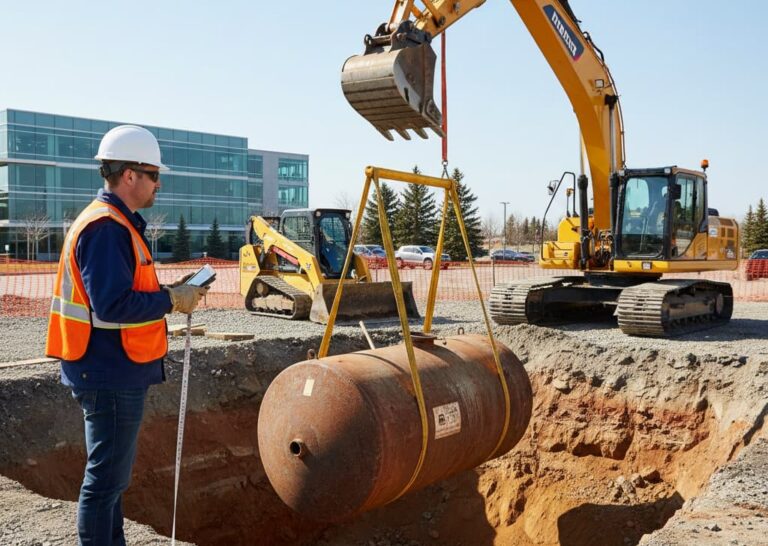
Underground fuel tanks play a critical role in supporting commercial, agricultural, and industrial fuel needs. However, when these tanks become old, unused, or damaged, they can pose serious environmental, financial, and legal risks. Removing an underground fuel tank (UST) is not just a best practice—it is often a regulatory requirement in Canada.
This comprehensive guide explains everything you need to know about underground fuel tank removal, the risks of keeping an outdated UST, the benefits of professional removal, and why Absolute Petroleum is the trusted partner for safe, compliant, and efficient UST removal services across Canada.
About Absolute Petroleum
With more than 20 years of experience, Absolute Petroleum has become a respected leader in Canada’s petroleum services industry. We proudly serve businesses across the country by delivering safe, efficient, and innovative fuel system solutions.
Our team consists of 30+ dedicated professionals and over 200 years of combined Licensed Petroleum Technician (LPT) experience, making us Manitoba’s largest petroleum contractor and a trusted partner for tank installation, inspection, maintenance, cleaning, and removal.
At Absolute Petroleum, our mission is simple: To provide safe, compliant, and cost-effective petroleum solutions that protect people, property, and the environment.
Understanding Underground Fuel Tanks
What You Need to Know About Underground Storage Tanks
Underground storage tanks (USTs) are commonly used to store diesel, gasoline, heating oil, and other petroleum products. They can be found on commercial properties, agricultural sites, fuel stations, industrial facilities, and even older residential homes.
While USTs provide secure and discreet fuel storage, they also come with risks—especially as they age. Older steel tanks are highly prone to corrosion, leaks, and structural failure, which can cause soil contamination and groundwater pollution.
The Risks of Keeping an Old or Abandoned UST
Leaving an unused underground tank in place may seem harmless, but it can lead to:
- Soil contamination from petroleum leaks
- Groundwater pollution, which affects nearby properties
- Structural collapse, creating dangerous sinkholes
- Fire or explosion hazards from leftover vapours
- Liability issues that affect property owners
- High remediation costs if contamination spreads
Canadian environmental laws require property owners to address these risks, making UST removal a necessary step for safety and compliance.
Why DIY Removal Is Dangerous
Removing a fuel tank is not like digging up a buried object. It involves hazardous materials, strict regulations, specialized equipment, and certified technicians.
DIY removal is dangerous because:
- Fuel vapours can ignite
- Tanks may collapse or rupture during excavation
- Improper handling can contaminate soil or groundwater
- Non-certified removal violates Canadian regulations
- Fines and penalties may apply
Always rely on licensed petroleum contractors to ensure your UST is removed safely and legally.
Why You Should Remove an Underground Fuel Tank
Removing an outdated or unused UST offers several key benefits for Canadian property owners.
Environmental Safety
Leaking tanks are one of the leading causes of soil and groundwater contamination. Early removal helps prevent environmental damage and reduces the risk of costly cleanup requirements.
Regulatory Compliance
Canadian provinces—including Manitoba, Alberta, Ontario, and British Columbia—have strict guidelines governing underground fuel tanks. Failure to follow these regulations may result in fines, legal action, or mandatory remediation orders.
Property Value Protection
Real estate transactions often require environmental inspections. A property with an unused UST may be difficult to sell or finance. Removing the tank improves resale value and eliminates concerns for potential buyers.
Reduced Liability
UST leaks can expose owners to:
- Environmental penalties
- Insurance claims denials
- Legal liability for neighbouring contamination
- Unexpected remediation expenses
Removal significantly lowers these risks.
Future Development and Land Use
Whether you plan a building expansion, new construction, or redevelopment, clearing the land of old tanks ensures a safe foundation for future growth.
When Is It Time to Remove a UST?
Several signs indicate a fuel tank may be leaking or failing. Property owners should look for:
Faster Consumption of Fuel
If your fuel levels drop more quickly than usual, it may indicate a leak beneath the surface.
Wet or Moist Ground Spots
Moisture or oily residue appearing above the tank area is a common sign of leakage.
Unusual Odors Around the Property
Strong petroleum smells near the buried tank suggest fumes may be escaping through cracks.
Basement Abnormalities
Unexpected odors, stains, or dampness in the basement can mean fuel vapours are entering the structure.
If you notice any of these signs, contact Absolute Petroleum immediately for an assessment.
Professional Underground Fuel Tank Removal Services
Professional UST removal ensures compliance with environmental regulations and protects your property from long-term damage.
Comprehensive Identification and Removal
Our team performs complete site assessments to identify your tank’s location, condition, and risks. This includes reviewing historical records, conducting ground scans, and planning safe excavation procedures.
Soil Testing and Contamination Management
We collect soil samples to determine whether leakage has occurred. If contamination is found, our certified specialists manage cleanup following provincial and federal standards.
Certified Soil Transportation and Restoration
Contaminated soils must be transported, disposed of, and documented according to Canadian environmental regulations. After removal, we restore the site through backfilling and ground compaction.
The Underground Fuel Tank Removal Process
Removing an underground fuel tank requires a structured, regulated process. Here is how Absolute Petroleum handles UST removal from start to finish:
1. Notify Local Government Authorities
Before removal begins, we secure all required permits and notify environmental authorities as mandated by provincial regulations.
2. Hire a Licensed Petroleum Contractor
Choosing a certified company like Absolute Petroleum ensures compliance, safety, and proper documentation for environmental closure.
3. Empty the Tank
Fuel, sludge, and vapours are safely pumped out. Our team uses specialized equipment to remove all residues.
4. Inert the Tank
To prevent ignition, the tank is filled with inert material or gas to neutralize any remaining vapours.
5. Excavate the Area
We carefully excavate around the tank to avoid damaging utilities, structures, or the tank itself.
6. Clean and Remove the Tank
Once exposed, the tank is cleaned, removed, and transported to an approved disposal or recycling facility.
7. Manage Contaminated Soils
Any impacted soil is removed, replaced, and transported under certified environmental guidelines.
8. Gather Soil Samples
Post-removal sampling confirms the site is free of contamination.
9. Closure Reporting
We prepare a complete environmental closure report, including:
- Photos
- Soil test results
- Disposal records
- Regulatory documentation
This report is critical for future property transactions, audits, or development.
Tank Removal Regulations in Canada
Canada has strict environmental regulations governing UST installation, operation, and removal. These regulations ensure proper environmental protection and accurate reporting.
Key Federal and Provincial Requirements
Depending on the province, tank owners may need to:
- Register the tank with environmental agencies
- Hire certified LPT professionals for removal
- Submit soil test results
- File a closure report
Absolute Petroleum stays fully updated on all Canadian UST regulations to ensure your project meets every requirement.
Qualifications and Recognitions to Look For
A reputable petroleum contractor should have:
- Licensed Petroleum Technician (LPT) certification
- Environmental safety training
- Proven experience removing USTs
- Liability insurance and compliance credentials
Absolute Petroleum meets—and exceeds—these standards.
Why Choose Absolute Petroleum for UST Removal?
With decades of petroleum industry expertise, Absolute Petroleum offers unmatched service quality and safety.
Specialty and Compliance
Our technicians follow regulatory best practices, ensuring your site remains compliant with all Canadian environmental laws.
Environmental Safety
We use advanced contamination management methods to protect soil, water, and property.
Efficient, Hassle-Free Service
From initial assessment to final restoration, our process is designed to minimize downtime and disruption.
Peace of Mind
Choosing Absolute Petroleum means working with professionals who prioritize safety, precision, and customer satisfaction. Our long-standing reputation reflects our commitment to excellence.
Frequently Asked Questions
How to remove an underground fuel tank?
Removing an underground fuel tank requires a licensed petroleum contractor and must follow Canadian environmental regulations. The process typically includes:
- Securing permits and notifying local environmental authorities.
- Hiring a certified Licensed Petroleum Technician (LPT) to manage the removal.
- Pumping out all remaining fuel and cleaning the tank to eliminate vapours.
- Inerting the tank to reduce fire and explosion risk.
- Excavating the area around the tank using specialized equipment.
- Lifting the tank from the ground and transporting it to an approved disposal or recycling facility.
- Testing soil samples to check for contamination.
- Documenting the closure with an environmental report.
Because UST removal involves hazardous materials, strict regulations, and environmental risk, it should only be performed by qualified professionals such as Absolute Petroleum.
How much does it cost to remove an underground oil tank?
The cost of removing an underground oil tank in Canada typically ranges from $3,000 to $10,000+, depending on several factors:
- Tank size and material
- Depth and accessibility
- Soil conditions
- Regional permitting fees
- Whether contamination is found
- Required restoration work
If soil contamination is detected, cleanup costs can increase significantly based on the severity and provincial environmental requirements.
For accurate pricing, Absolute Petroleum provides site assessments and detailed estimates tailored to your property and local regulations.
What is an alternative option to removing a buried oil tank?
If a tank cannot be removed—for example, due to structural risks or underground utilities—decommissioning in place is an alternative approved method in certain Canadian jurisdictions.
This process includes:
- Emptying and thoroughly cleaning the tank
- Filling it with sand, slurry, foam, or concrete
- Verifying that it is permanently sealed and poses no environmental risk
- Documenting the decommissioning for regulatory and real-estate purposes
However, not all provinces allow in-place decommissioning, and removal is generally the preferred and most compliant option. Always consult with a certified petroleum contractor to determine which method is legally acceptable.
What are acceptable ways to decommission an underground storage tank?
In Canada, underground storage tanks can be decommissioned using two main methods, depending on local regulations:
1. Complete Removal (Preferred)
This is the safest and most widely accepted option. It involves:
- Removing the tank from the ground
- Inspecting and remediating the excavation site
- Conducting soil testing
- Completing environmental closure reports
2. Decommissioning in Place (In-Situ Decommissioning)
Allowed only when removal is not feasible. This includes:
- Pumping out remaining fuel
- Cleaning and degassing the tank
- Filling the tank with an inert material (concrete, foam, sand)
- Ensuring the tank cannot collapse or leak in the future
- Logging documentation for future property sales
Before choosing a decommissioning method, property owners must confirm provincial regulations and consult with licensed professionals like Absolute Petroleum to ensure environmental compliance and safety.
Do you offer above-ground tank removals?
Yes. We remove both above-ground and underground tanks safely and professionally.
What happens if contamination is found during removal?
We manage the entire process—from excavation to soil disposal and remediation—based on environmental regulations.
How long does underground tank removal take?
Most removals take one to three days, depending on the tank size, depth, and site conditions.
Do I need a permit for UST removal?
Yes. Permits are generally required, and Absolute Petroleum handles all approvals on your behalf.
Do you remove residential tanks?
Yes, we provide UST removal services for commercial, residential, agricultural, and industrial properties.
Conclusion
Underground fuel tank removal is an essential step in ensuring environmental safety, property protection, and regulatory compliance. Whether your tank is aging, unused, leaking, or stands in the way of future development, removing it promptly helps prevent costly problems and long-term liability.
With more than 20 years of experience and a team of highly skilled Licensed Petroleum Technicians, Absolute Petroleum is your trusted partner for safe and efficient underground storage tank removal across Canada.
If you need a site assessment, tank inspection, or complete UST removal service, reach out to our team today. We are here to help you protect your property—and the environment—with confidence.